Coconut Curry Salmon (No Curry Paste Needed)
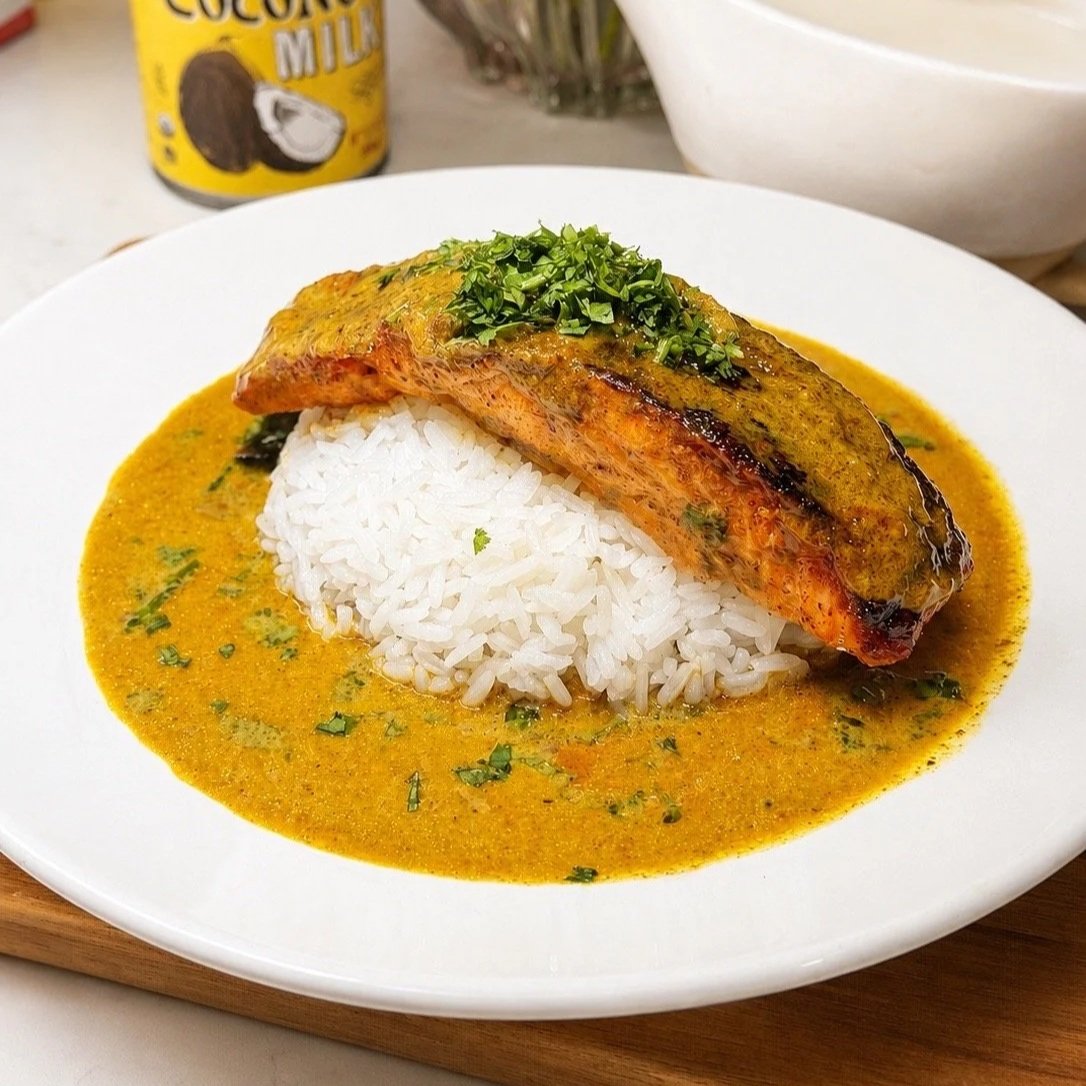
A plate of coconut curry salmon over rice, the seared fillet leaning against the rice with glossy curry sauce pooled around it, finished with fresh cilantro and a lime wedge.
There's a version of this recipe floating around every food blog that calls for red curry paste, lemongrass, and a trip to the international aisle. This one skips all of that. It's built around curry powder — the jar already in your cabinet — bloomed properly so it tastes rich and layered instead of flat. Same glossy, restaurant-plate result, a fraction of the shopping list.
Table of Contents
Why This Recipe Works
Ingredient Notes
How to Make Coconut Curry Salmon
Tips for Restaurant-Style Results
Storage & Reheating
FAQ
Recipe Card
Why This Recipe Works
Most coconut curry salmon recipes lean on red or green curry paste for flavor and color. Great when you have it — inconvenient when you don't. This version blooms curry powder with paprika and a touch of heat directly in oil before the coconut milk goes in, which is the step that makes or breaks a curry-powder-based sauce. Skip it, and the curry tastes raw and dusty. Do it right, and you get the same deep, rounded flavor as a paste-based sauce, built entirely from pantry staples.
The salmon is seared first, skin-side down, in the same pot the sauce gets built in — so you get a crisp, golden crust and only one pot to wash.
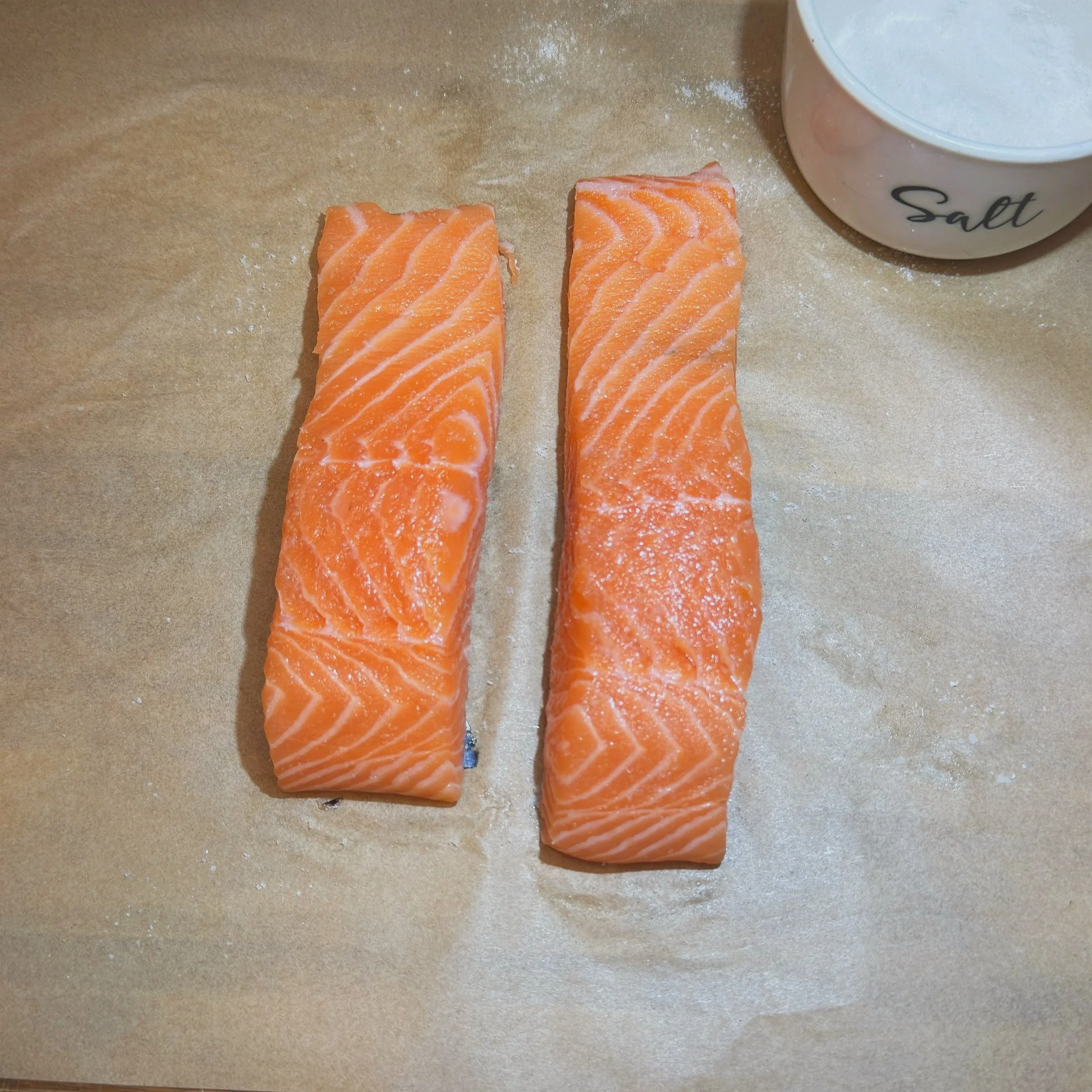
Two skin-on salmon fillets resting on parchment paper, patted dry and ready to be seasoned before searing.
Ingredient Notes
Salmon – Skin-on fillets sear best and hold together in the sauce. Pat them fully dry before searing for the best crust.
Curry powder – Any standard yellow curry powder works. For a Caribbean-leaning flavor, use a West Indian-style curry powder if you have access to one.
Coconut milk – Full-fat, canned. Light coconut milk works but the sauce will be thinner and less rich.
Fish sauce – Adds savory depth. Don't skip it — there's no real substitute for the umami it brings.
Paprika – Standing in for the color curry paste would normally provide.
Cayenne or scotch bonnet – Adjust to taste. Scotch bonnet adds real West Indian heat and flavor if you have it on hand.
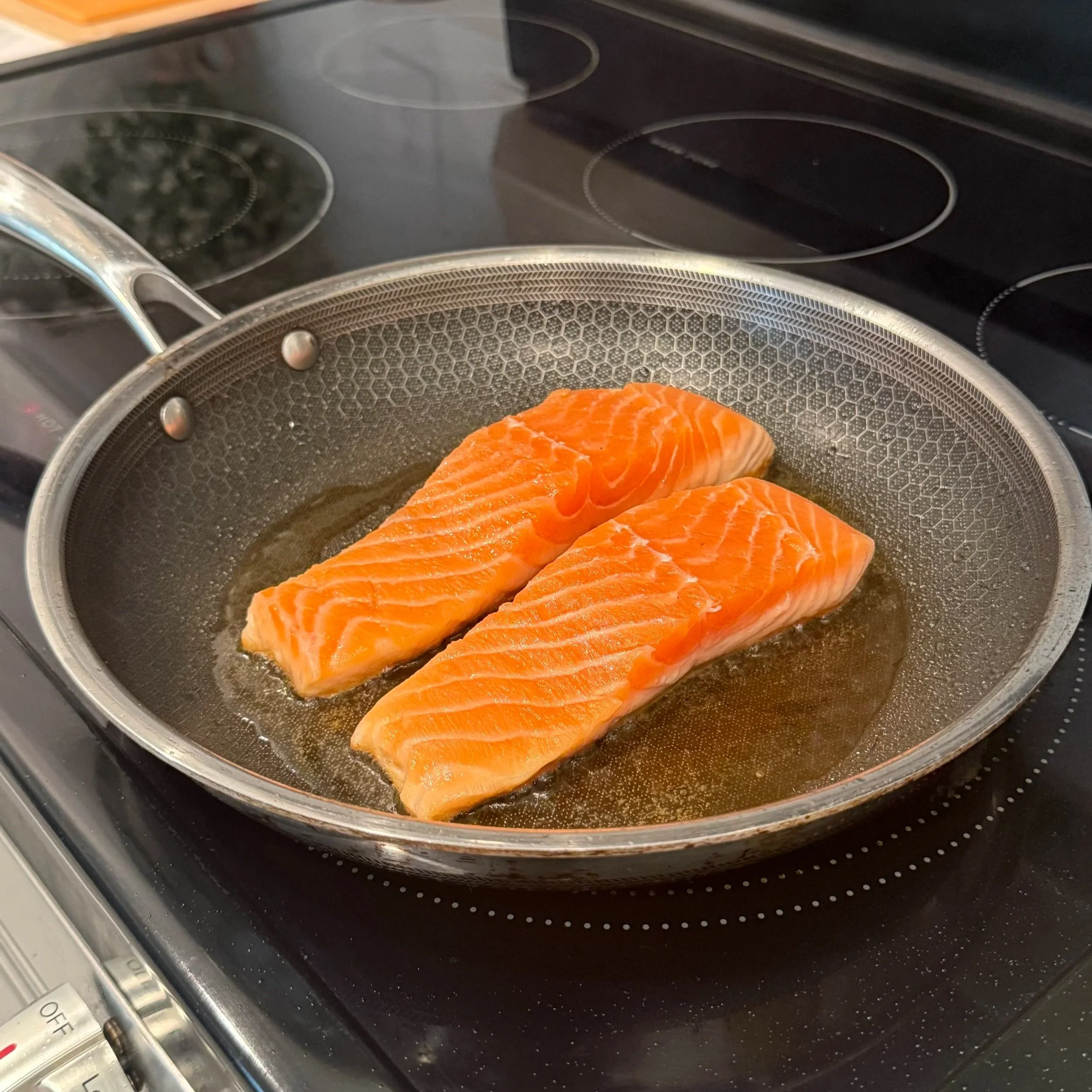
Salmon fillets searing skin-side down in a hot pan, the skin turning golden and crisp.
How to Make Coconut Curry Salmon
Season the salmon fillets with salt.
Sear skin-side down in a hot pot until golden and crisp, flip briefly, then remove.
In the same pot, bloom curry powder, paprika, and cayenne in oil for 30 seconds until fragrant.
Add coconut milk, ginger, brown sugar, fish sauce, and lime juice. Simmer 3-4 minutes.
Nestle the salmon back into the sauce and simmer until just cooked through.
Finish with fresh cilantro and lime, and serve over rice.
Storage & Reheating
Store leftovers in an airtight container in the fridge for up to 3 days.
Reheat gently on the stovetop over low heat, adding a splash of water or coconut milk to loosen the sauce. Avoid microwaving on high, which can dry out the salmon.
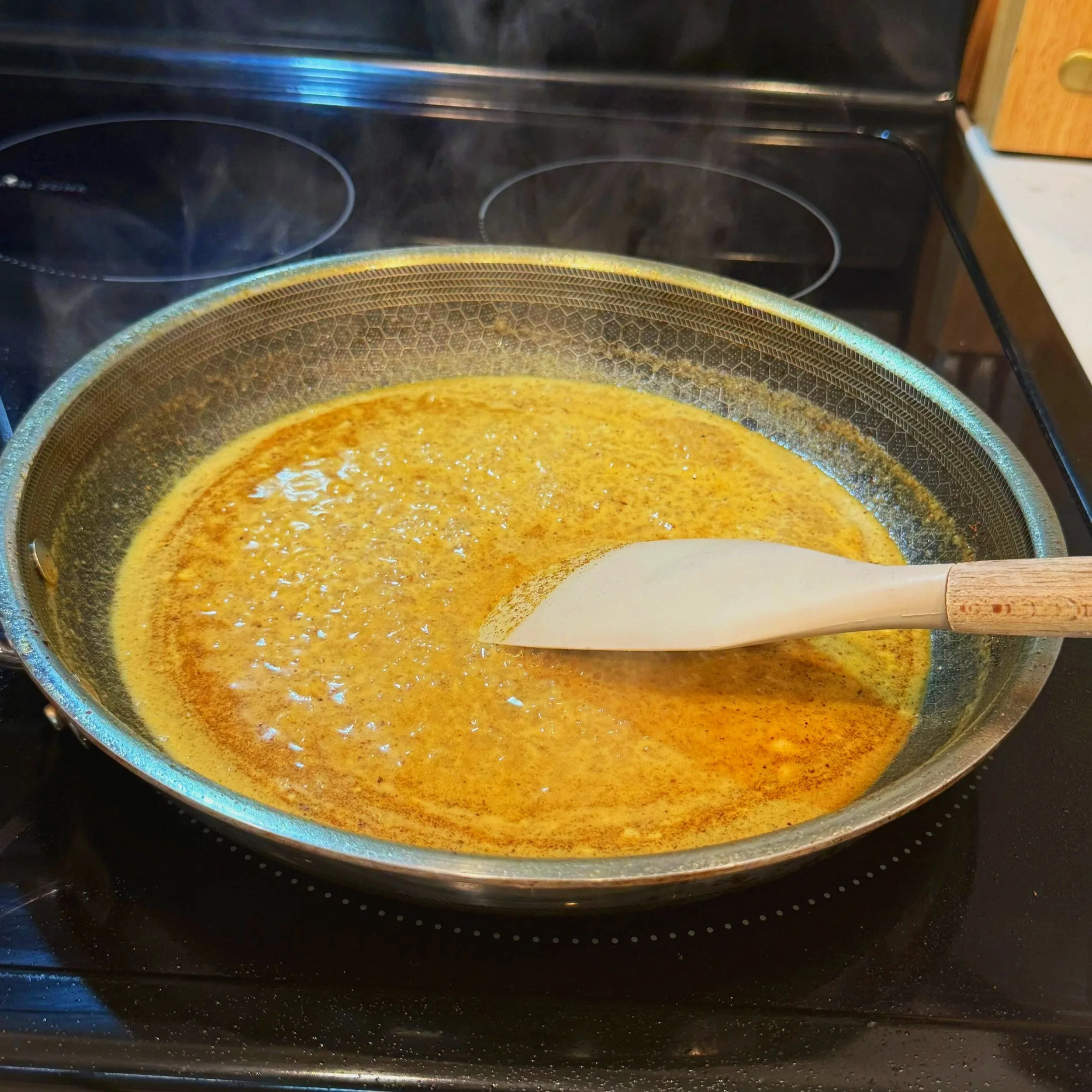
A creamy coconut curry sauce simmering in a pot, with visible ginger, spices, and a golden hue from the curry powder and paprika.
FAQ
Can I use curry paste instead of curry powder?
Yes — swap in 2 tablespoons of red or green curry paste and skip the blooming step, since paste is already cooked down.
What can I serve with coconut curry salmon?
Steamed jasmine or basmati rice is classic. It also works well over rice noodles or with a side of sautéed greens.
Can I make this dairy-free?
It already is — coconut milk is the only dairy-adjacent ingredient, and it's plant-based.
Is this recipe spicy?
As written, it's mild to medium. Adjust the cayenne or scotch bonnet up or down to control the heat.
Tips for Restaurant-Style Results
Don't wipe the pot after searing — the browned bits deepen the sauce.
Let the salmon sear undisturbed; it releases from the pan naturally when it's ready to flip.
Plate the rice off-center, lean the salmon against it, and spoon sauce around rather than over — it's the difference between "home cook" and "restaurant plate."
A thin swirl of extra sauce right before serving gives the dish shine on camera and in person.
Variations
Caribbean-style: Swap standard curry powder for a West Indian-style curry powder and add a whole scotch bonnet pepper (kept intact, not minced) to the sauce while it simmers for gentle heat — remove before serving.
Extra vegetables: Stir in baby spinach or sliced bell peppers during the last few minutes of simmering for added color and nutrition.
Shrimp swap: Use large shrimp in place of salmon — sear 1-2 minutes per side instead of 3-4, since shrimp cooks much faster.
Coconut-lime rice: Cook the rice in coconut milk and a squeeze of lime instead of water for a dish that's coconut through and through.
Extra rich: Use full-fat coconut milk instead of light for a thicker, creamier sauce.
Milder version: Omit the cayenne or scotch bonnet entirely for a curry-forward but heat-free dish, kid-friendly.
Substitutions
No curry powder: Use 2 tbsp red or green curry paste instead, and skip the blooming step since paste is already cooked.
No fish sauce: Substitute soy sauce or coconut aminos, though the flavor will be slightly less savory.
No fresh ginger: Use ½ tsp ground ginger in its place.
No fresh lime: Bottled lime juice works in a pinch — use the same amount.
No fresh cilantro: Swap in chopped green onion or fresh basil for the garnish.
No salmon on hand: Any firm white fish (cod, halibut) or shrimp works in the same method.
Coconut Curry Salmon (No Curry Paste Needed)
Restaurant-style coconut curry salmon made with pantry curry powder instead of curry paste. Pan-seared, one pot, ready in 30 minutes.
Ingredients
Instructions
Notes
- Curry powder needs a full 30-second bloom in oil before any liquid is added — this is the step that makes the sauce taste rich instead of raw or dusty.
- Pat the salmon completely dry before searing so the skin actually crisps. Don't wipe the pot after searing; the browned bits deepen the sauce flavor.
Nutrition Facts
Calories
546Fat
42 gSat. Fat
21 gCarbs
7 gFiber
1 gNet carbs
6 gSugar
2 gProtein
37 gSodium
893 mgCholesterol
94 mg